

Turn referrals and RFPs into
signed work.
The new-business board for agencies, studios, and consultants — every prospect, proposal, and follow-up in one place that isn't a spreadsheet or a CRM project.
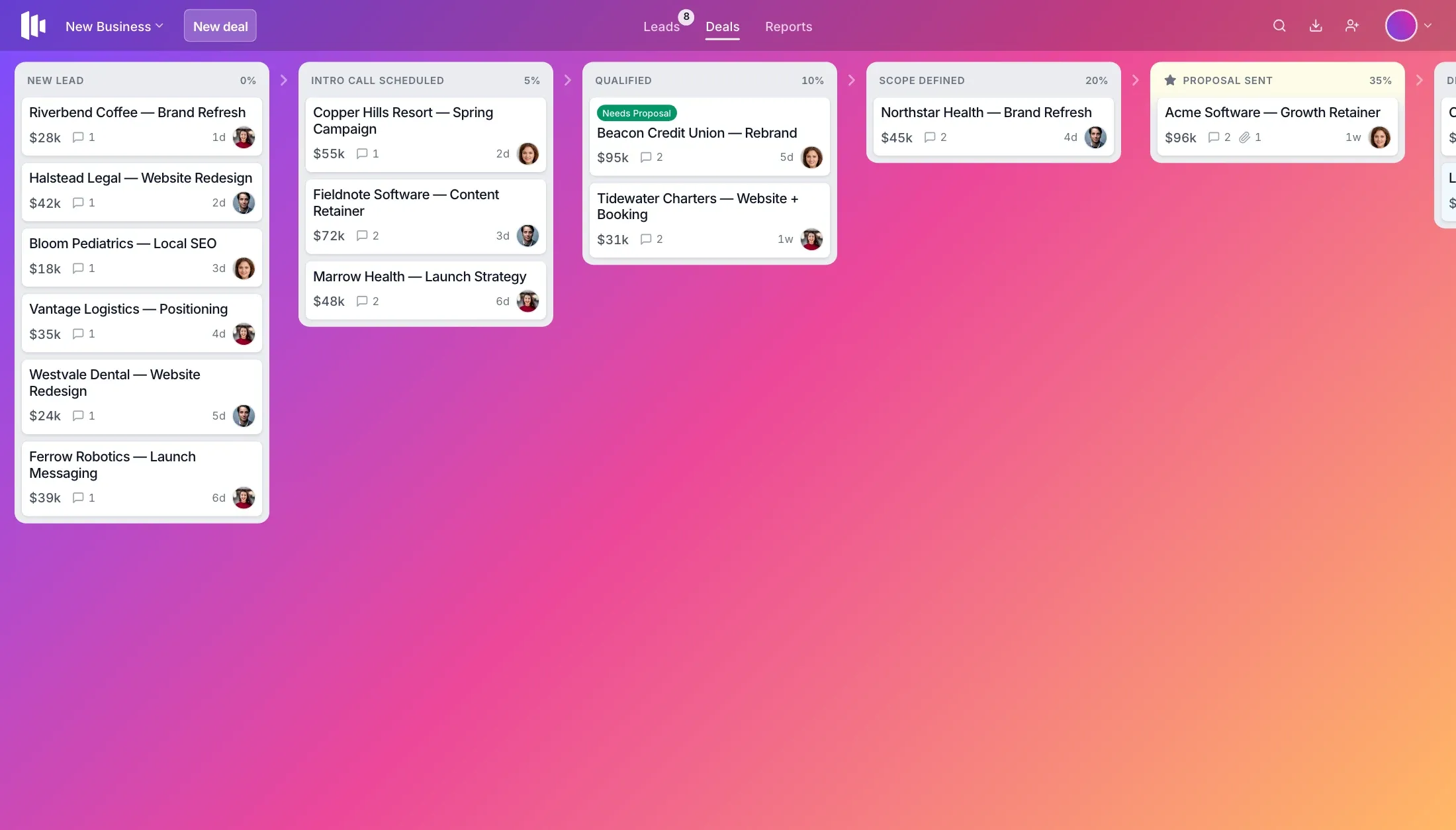
Your board comes set up like this. Rename anything.
You sell between deliveries.
The tracker can't be a chore.
New business dies in the gaps — the referral answered late, the proposal never nudged, the “let's talk next quarter” that nobody wrote down.
Follow-ups die in the inbox.
The website redesign you scoped in March. The brand refresh proposal nobody nudged. Every open proposal sits on the board until it's answered — and quiet ones frost over so you see them.
The pipeline lives in the founder's head.
One shared board: every referral, RFP, and pitch — its stage, value, and owner. Partners see the same picture, live. No Monday-morning “where are we with…” round.
A CRM is a project. You have projects.
No fields to configure, no admin to appoint. Your board arrives set up for how client work is won — referral, scope, proposal, booked — and you can rename anything.
Works with
Built for how client work actually gets won.
Every opportunity on one board.
Each prospect is a card: client, engagement value, owner, and stage — from first conversation through booked. Website redesigns, rebrands, campaigns, and retainers side by side. Drag it forward as it moves.
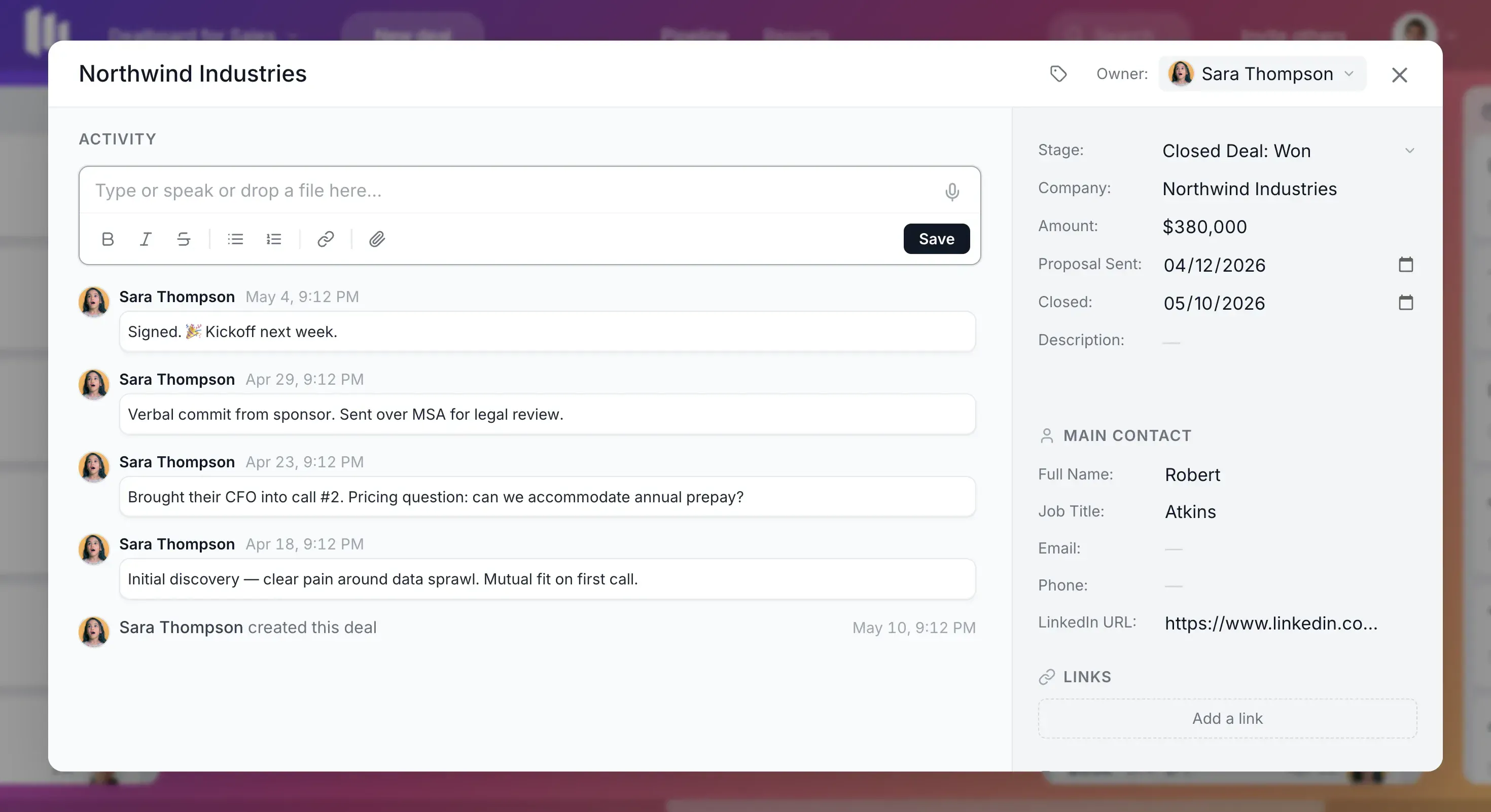
The whole story stays on the engagement.
Scope notes, the proposal you sent, what they pushed back on, who has to approve it — attached to the opportunity. Hand a project to a partner and they can read the history in a minute.
Your new-business number, always current.
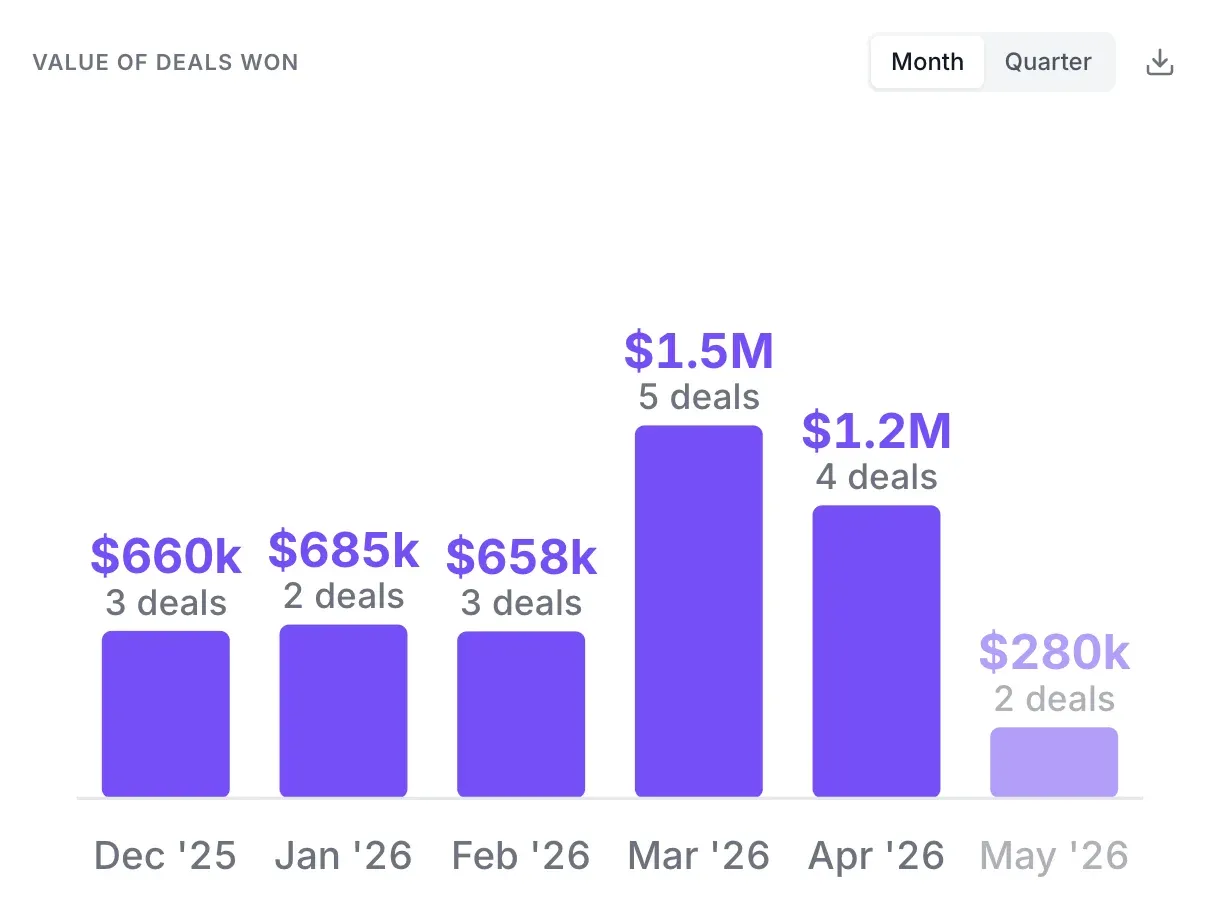
Proposals sent, engagements booked, and revenue booked — charted monthly against your goals, automatically. The partner meeting starts with facts instead of impressions.
The eight emails every engagement generates — already written.
Your board comes with a reply library built for new business. One click opens the email in Gmail with the contact's name and company filled in.
Dealboard vs. the spreadsheet vs. an agency CRM.
The honest comparison for a firm that sells between deliveries.

 | A spreadsheet | An agency CRM | |
|---|---|---|---|
| Getting started | Board arrives set up for new business | Design it yourself, again | Onboarding project plus an admin |
| Proposal follow-up | Open proposals visible; quiet ones frost over | A column nobody sorts by | Tasks you have to remember to create |
| Capturing referrals and RFPs | Hosted intake form plus reply tracking | Copy-paste from email | Forms module, extra configuration |
| New-business reporting | Proposals and booked revenue vs. goals | Formula maintenance | Dashboard setup |
| Price for a small firm | Free to start — unlimited teammates | Free, plus everyone's time | Per-seat, adds up fast |
Dealboard tracks winning the work — it is not project management, time tracking, or invoicing. Keep your delivery stack; Dealboard is what runs before the engagement is signed.
Questions firms ask.
Is this project management?
How do retainers work if there's one amount field?
Can I change the stages?
Does it work for consultants and fractional execs, not just agencies?
What does it cost?
Your new-business board is ready.
The spreadsheet can retire.
Start free with one board and up to 30 active opportunities.
No credit card required.