

Better than a spreadsheet.
Simpler than a CRM.
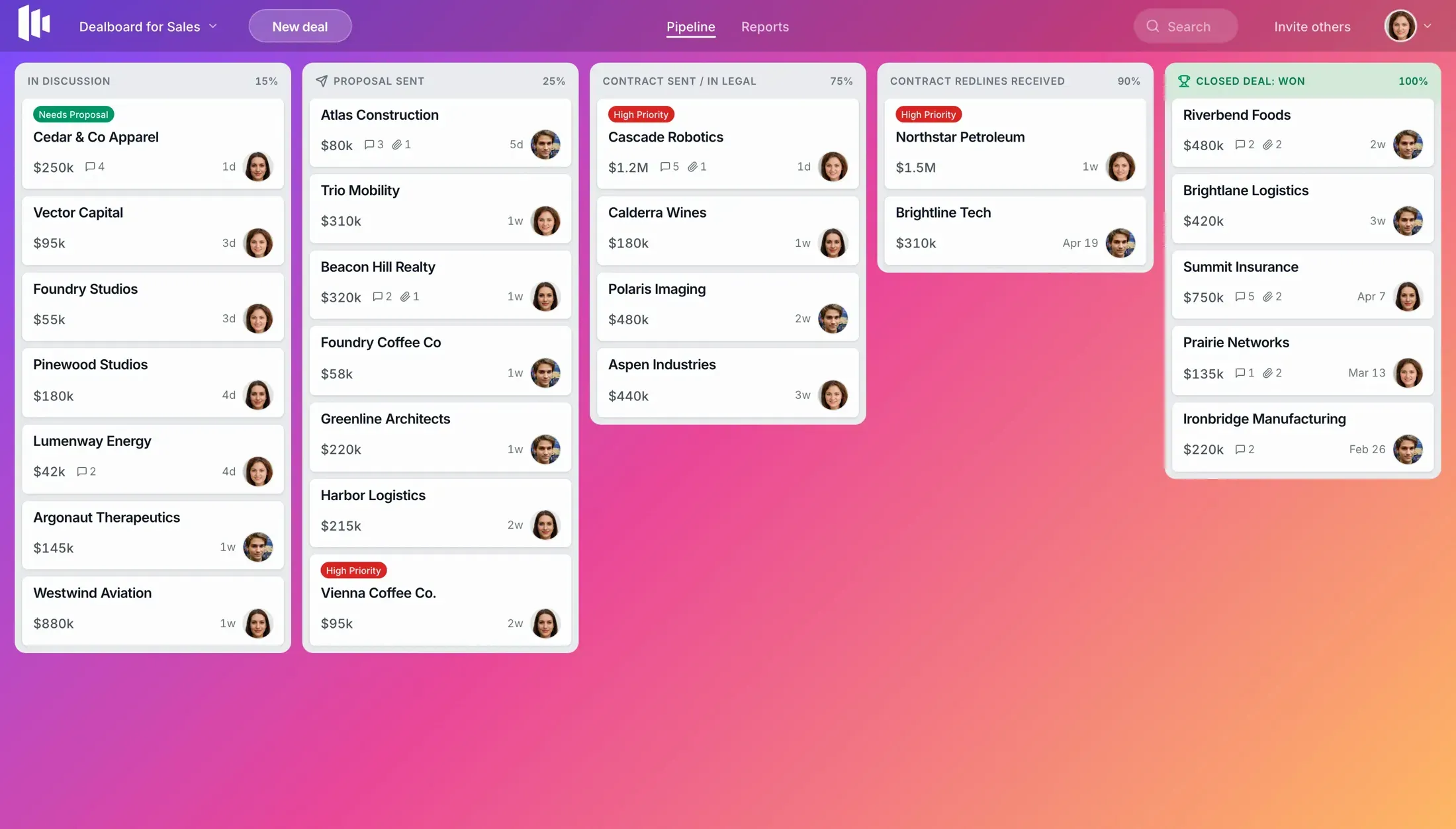
A visual deal tracker for founders and small teams who would rather close deals than configure software.
Works with
Start with a working pipeline.
Dealboard comes with the stages, reports, and defaults already in place. Add your deals and get moving.
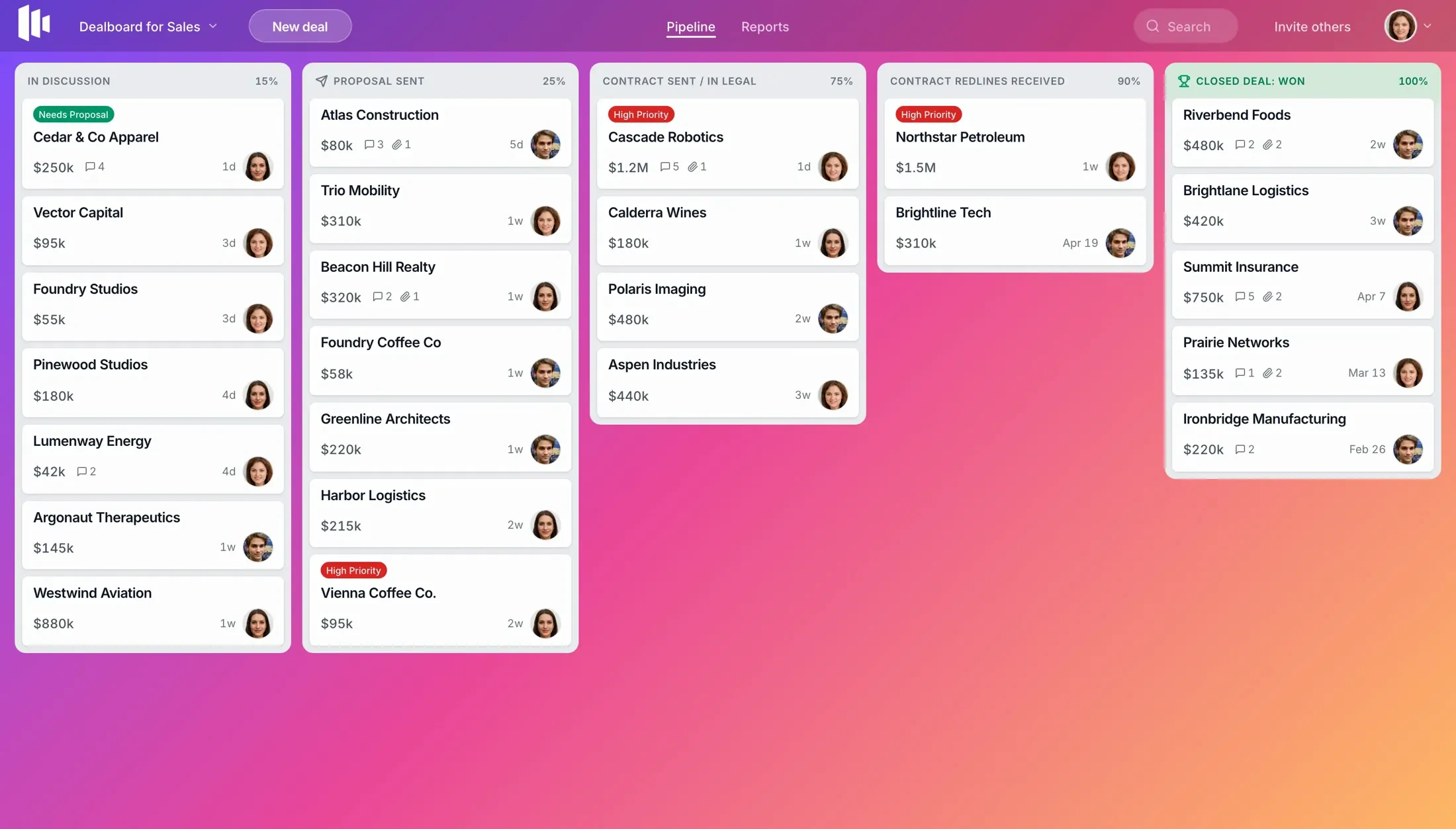
Built for how small teams actually sell.
Know where every deal stands.
Owner, amount, stage, notes, files, and next steps stay attached to the deal.
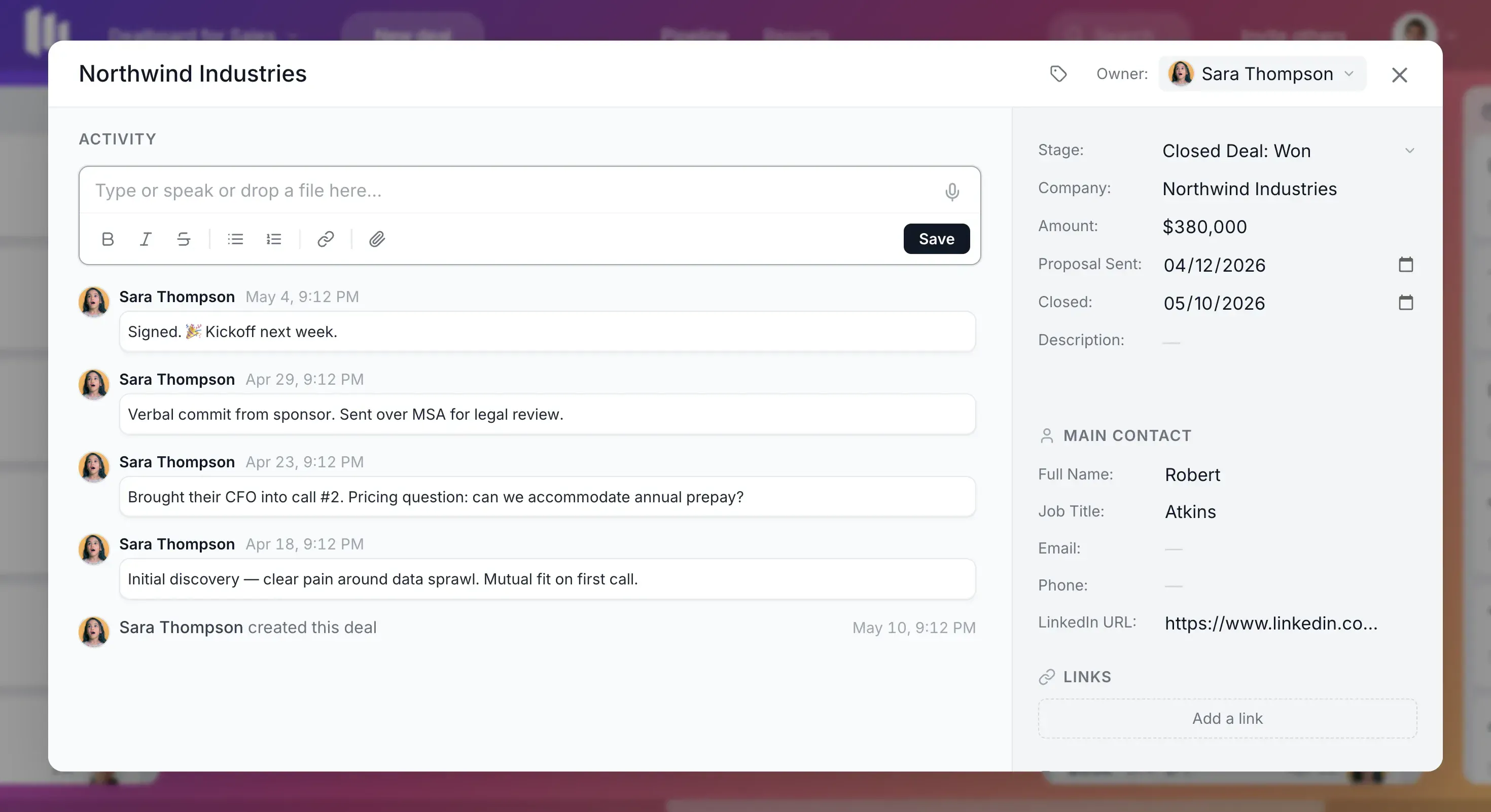
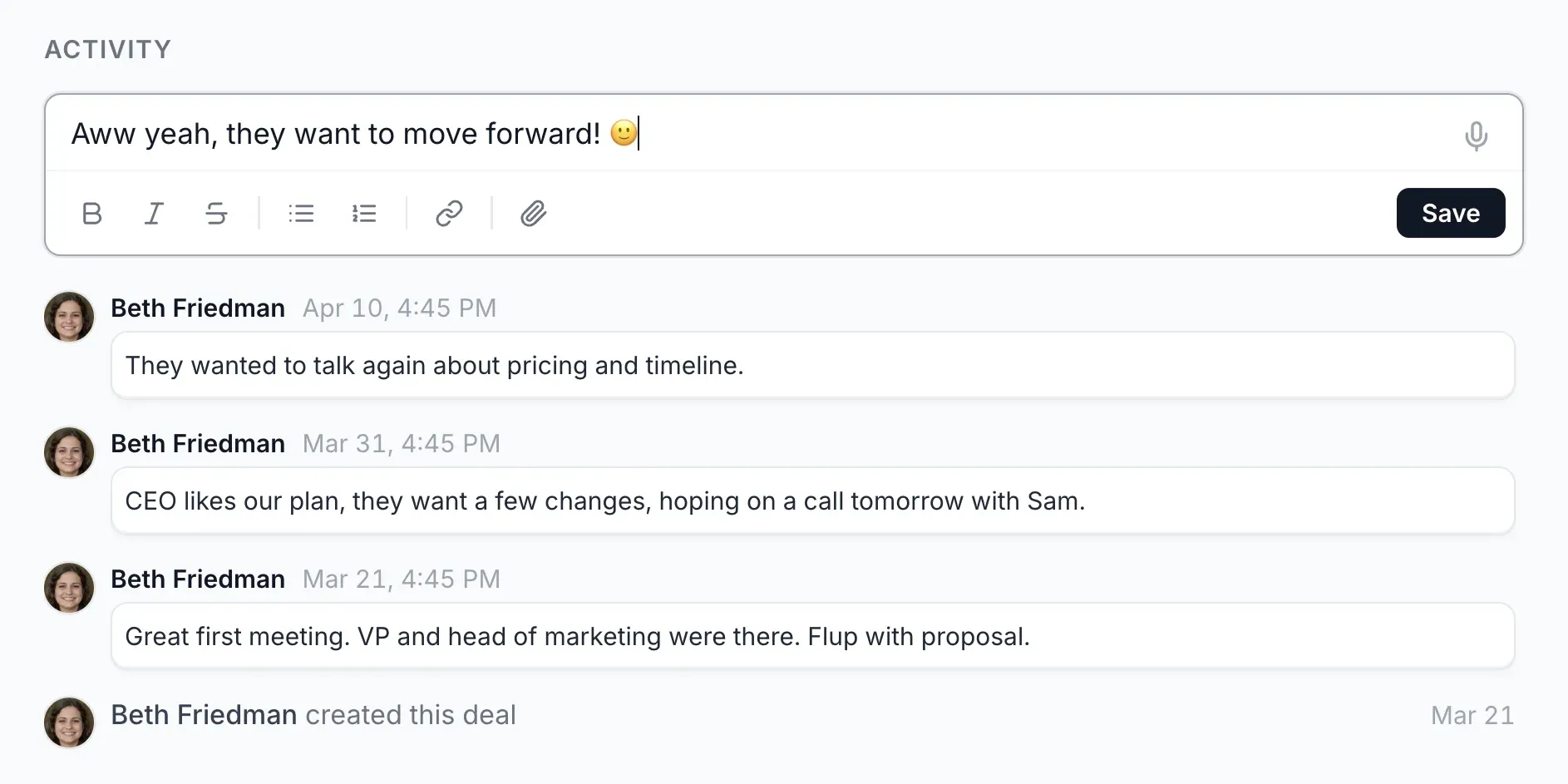
Notes in seconds. Easy enough that your team will do it.
Click a deal, type, hit Enter. Or just speak. Timestamped and saved.
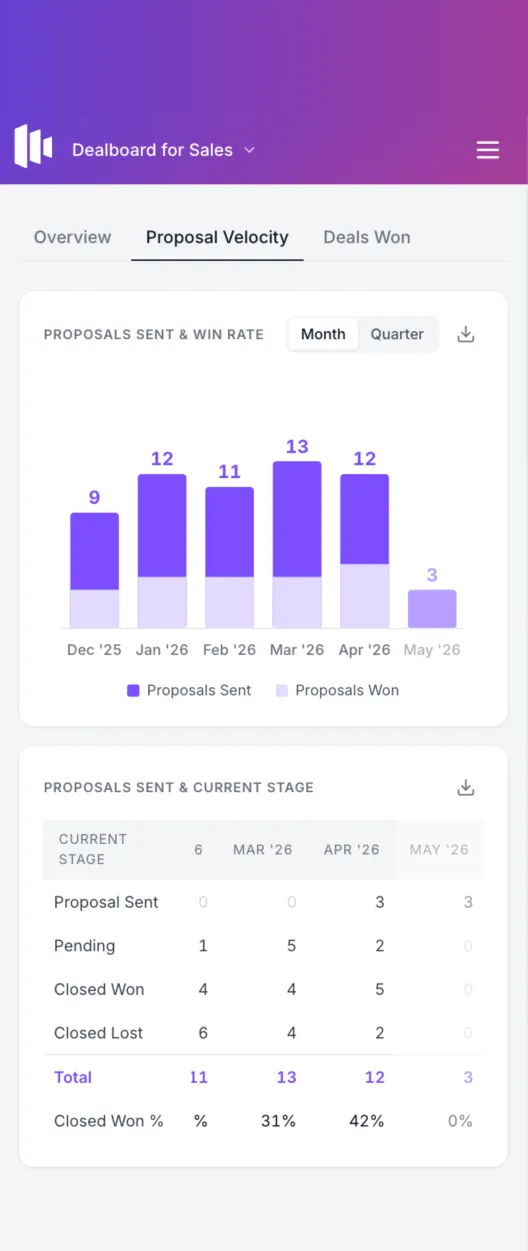
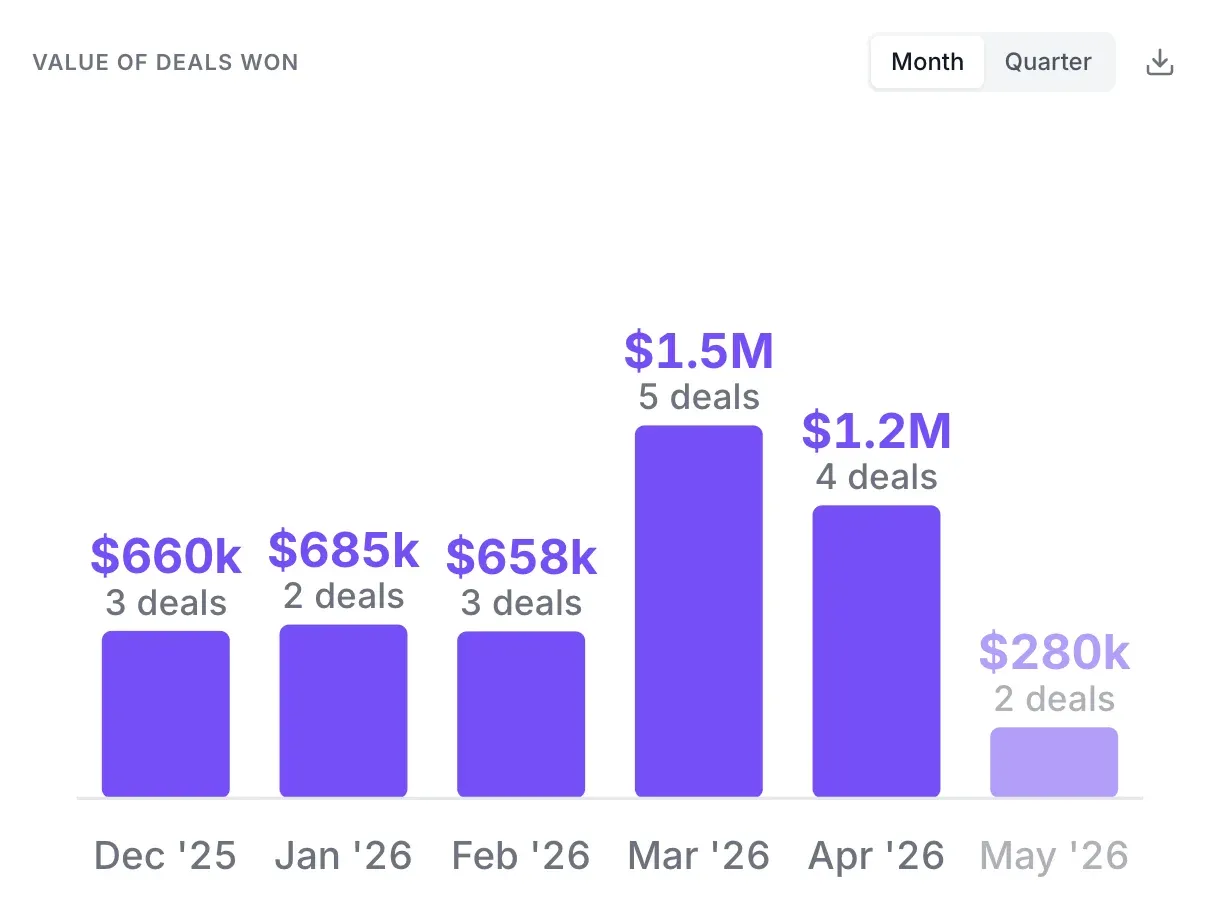
Give everyone the same clear view of the numbers.
See how you're progressing against your goals, including proposals sent and deals won. Then export or share an image with one click.
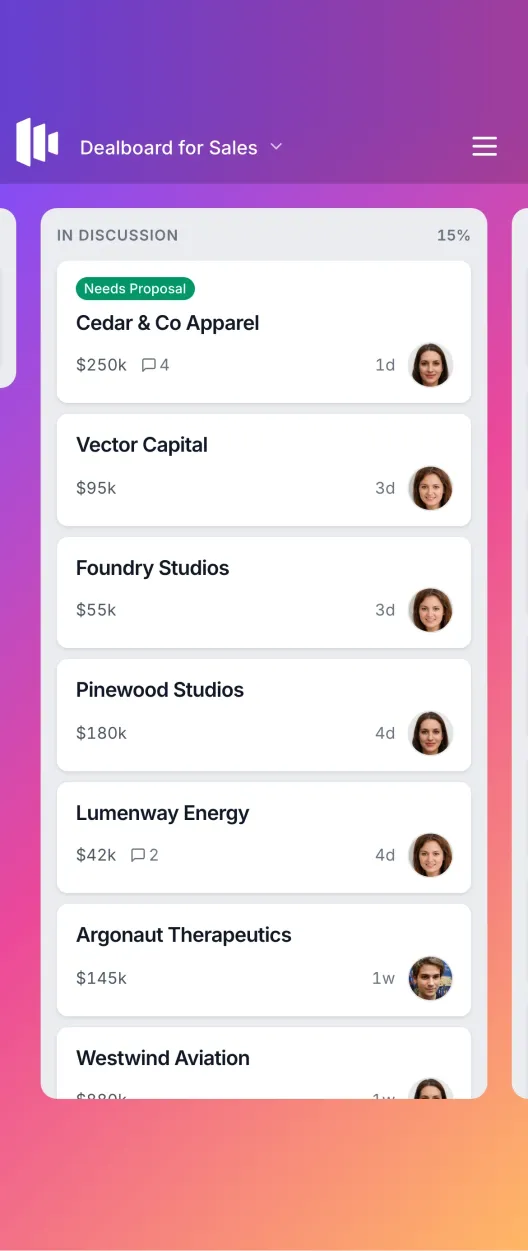
Works great on mobile, right after the meeting.
Pull up the deal, type or dictate a quick note, and save the update while the conversation is still fresh.
Move deal tracking out of general-purpose tools.
Founders, salespeople, and business development teams use Dealboard to keep important opportunities organized, current, and easy to share.
Startup sales
Track prospects, proposals, follow-ups, and won deals without setting up a full CRM.
Business development
Keep partner conversations, strategic opportunities, and next steps in one clear place.
Fundraising conversations
Track investor discussions, follow-ups, status, and notes with the same structure you use for other deal work.
An opinionated deal tracker. By design.
Dealboard gives you the structure up front, instead of asking you to design a sales system from scratch.
One job: track deals.
Not campaigns. Not support tickets. Not a giant customer database. Dealboard is built for the deals your team is trying to move forward.
The defaults are already there.
Stages, probabilities, reports, and key fields come pre-configured — and the stages are yours to rename or restructure as your pipeline evolves. You can start tracking deals without turning setup into a project.
One way to track, one clear view.
When every dealboard follows the same basic structure, the numbers are easier to understand. Your board, CFO, manager, and team get a clear view without the usual spreadsheet pain.
For small teams that want a real system, ready to go.
Without building, wrestling with, and maintaining a full-blown CRM.

 | A spreadsheet | A full CRM | |
|---|---|---|---|
| Getting started | First deal < 1 min | Build your own tracker | Configure the system first |
| Structure | Sensible defaults included | Easy to break | Powerful, but complex |
| Deal context | Notes, owner, files, and next steps stay with the deal | Spread across cells and comments | Often buried in fields |
| Updates | Clear enough to share | Requires cleanup | Requires dashboards or admin work |
| Mobile | Fast notes after meetings | Awkward | Usually heavier than needed |
| Best for | Small teams that want clarity without CRM overhead | One-off tracking | Larger orgs that can maintain a complex system |
Dealboard is not built for large sales organizations that need custom objects, territory management, complex automations, and a dedicated CRM admin. It is built for small teams that want a clear, consistent way to track deals.
Free to start.
Start free with one dealboard and up to 30 active deals — the REST API, MCP server, and Slack/Teams integrations included. Upgrade for unlimited dealboards and active deals.
Teams should not have to invent deal tracking from scratch.
Cap tables got a standard system. Deal tracking should feel just as clear: shared stages, consistent math, and updates everyone can understand.
Why we built DealboardGet out of the spreadsheet.
Skip the CRM project.
Start free with one dealboard and up to 30 active deals.
No credit card required.